Buying Horse Property in Ocala
How discipline, usable acreage, drainage, barn workflow, trailer access, expansion potential, and proximity to World Equestrian Center shape an Ocala horse-property search.
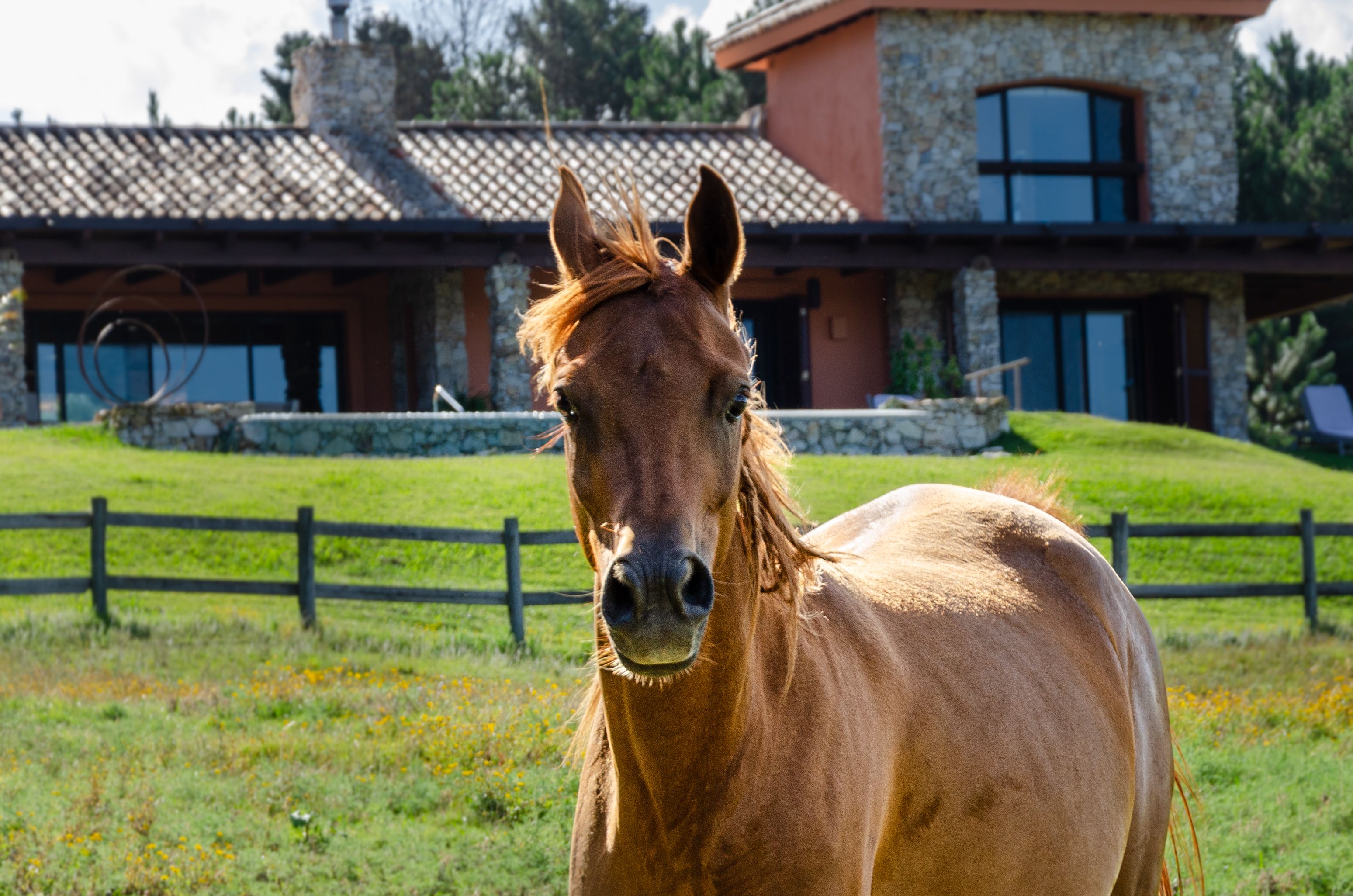
Ocala, Florida
TL;DR
The right Ocala horse property depends on discipline, operating needs, and the part of the regional equestrian market the buyer intends to use. Usable acreage, drainage, barn workflow, arena quality, trailer access, expansion capacity, and proximity to the buyer’s actual destinations matter more than the listing’s farm label.
Ocala has no shortage of equestrian property.
That is exactly why the search gets complicated.
There are polished equestrian estates near World Equestrian Center, working horse farms built around training and breeding, smaller private stables, Thoroughbred operations, hunter/jumper farms, dressage properties, eventing setups, Quarter Horse facilities, and acreage that looks like horse country but would take serious money to make function like it.
They can all appear under the same broad search for Ocala horse property.
They are not the same product.
If I were buying here, I would not start by asking what is available.
I would start by deciding which version of Ocala I actually need access to.
Ocala is an equestrian market before it is a residential market
That distinction changes how I would shop it.
Ocala and Marion County are not simply rural Florida with a lot of horses. The area has a deep equine economy built around breeding, training, showing, veterinary care, competition, and horse farms ranging from private acreage to major commercial operations.
World Equestrian Center, HITS Ocala, Florida Horse Park, Live Oak, Thoroughbred breeding farms, and the surrounding network of trainers and equine professionals create several overlapping markets inside one geographic area.
That means an Ocala equestrian property should be evaluated by what it connects you to.
A hunter/jumper buyer who expects to spend half the winter at WEC is solving a different real-estate problem from a Thoroughbred breeder.
A dressage rider may care about trainer access, footing, arena dimensions, and proximity to competition.
An eventer may put more weight on conditioning space, turnout, hauling routes, and access to Florida Horse Park.
A western rider looking at reining, roping, barrel racing, Quarter Horse competition, or rodeo-related use may need an entirely different arena, barn, trailer, and acreage setup.
The location can be right for one of those buyers and wrong for another without moving very far on the map.
I would define the horses before defining the real estate
“Ten acres with a barn” is not a useful buying brief.
How many horses?
What discipline?
How are they kept?
Do you need individual paddocks, larger pasture, or both?
Is this a private equestrian home or a working training farm?
Are clients coming onto the property?
Are you breeding?
Will staff be there?
Do you need a covered arena?
Do you need a full-size dressage court?
Is the arena for jumping, reining, barrels, roping, flatwork, or general riding?
How often are you hauling?
How close do you actually need to be to World Equestrian Center, HITS, Florida Horse Park, a trainer, or a veterinary facility?
Once those answers are clear, a large portion of the Ocala equestrian real-estate inventory stops being relevant.
That is a good thing.
The objective is not to tour more horse farms.
It is to know which ones deserve your time.
World Equestrian Center changes the value map
WEC is not just a landmark buyers mention in listing searches.
For some equestrian buyers, proximity to World Equestrian Center is an operating advantage.
If you are showing hunter/jumpers, competing in dressage, participating in western or breed events, keeping horses with a trainer nearby, or spending a large portion of the season at the venue, the drive becomes part of the property.
That convenience can command a premium.
Whether you should pay it is another question.
If your horses rarely need to be there, I would rather buy better land, better infrastructure, or more privacy somewhere else than pay for proximity you do not use.
This is where local search strategy matters.
“Horse property near WEC” is not automatically better than “horse property in Ocala.”
It is better only when WEC is actually part of your life.
The Thoroughbred side of Ocala is its own real-estate universe
Ocala’s Thoroughbred breeding and training industry is not a decorative part of the local horse culture.
It has shaped entire areas of Marion County.
A Thoroughbred farm can have requirements that barely resemble those of a private equestrian estate: larger paddocks, foaling facilities, training infrastructure, staff needs, safer separation of horses, farm-road access, equipment movement, and acreage configured around a working operation.
That is why I would be cautious about comparing a serious breeding farm to a luxury horse property purely on price per acre.
The improvements solve different problems.
The land solves different problems.
The buyer pool is different.
In specialty equestrian real estate, comparable does not always mean nearby.
Western riders should not let the English-sport image fool them
Ocala is strongly associated with hunter/jumper competition, dressage, eventing, and Thoroughbreds.
That is not the whole market.
Western disciplines are here too.
Reining, roping, barrel racing, Quarter Horse competition, western pleasure, and other western equestrian events have a place in the Ocala/Marion County horse economy, including at major venues.
If your search is driven by barrels, reining, ranch riding, roping, or a rodeo-oriented lifestyle, I would search differently.
Arena size and footing change.
Trailer requirements change.
Turnaround space becomes more important.
Cattle access may matter.
Covered riding space may matter differently.
A property marketed broadly as an Ocala horse farm can look ideal online and still be expensive to convert into the western setup you actually need.
Again, the discipline defines the property.
Usable acreage is the number I care about
Gross acreage makes listings easy to sort.
Usable acreage makes equestrian properties work.
If a twelve-acre parcel gives up ground to the residence, driveway, barn, arena, pond, wooded areas, setbacks, wet areas, equipment storage, and access lanes, you may be left with far less turnout than the headline suggests.
On the other hand, a smaller horse farm with an excellent layout can operate extremely well.
I want to see:
-
how much ground actually works as pasture or turnout;
-
whether paddocks can be divided sensibly;
-
where the barn sits in relation to those paddocks;
-
whether horses can be rotated;
-
whether there is room for a dry lot or sacrifice area;
-
where equipment moves;
-
and what happens if the operation grows.
That tells me more than “15 acres, fenced.”
Ocala land can look easy right up until the water moves
A beautiful dry-day showing can hide an expensive problem.
For an equestrian property, drainage is not just about whether the house floods.
I want to know what happens around the gates, barn entrances, arena, paddocks, trailer parking, manure area, and the routes horses use every day.
Where does water collect?
Where does it leave?
What becomes mud first?
Can you still get a loaded trailer through after prolonged rain?
How quickly does the arena recover?
If I had a choice, I would rather see a horse farm after bad weather than after a week of perfect Florida sunshine.
The land tells you more when it is under pressure.
An arena is valuable only if it saves you from building the arena you really need
“Arena” is one of the most misleading words in an equestrian listing.
An outdoor riding ring, full dressage court, jumper arena, reining pen, barrel arena, covered arena, and roping setup are all technically arenas.
That does not make them interchangeable.
I would want to know the dimensions, footing, base, drainage, irrigation, lighting, maintenance history, and whether the arena was built for the work you intend to do.
If it is wrong, I do not count it as a full-value improvement.
I count the cost of fixing it.
The same applies when the listing says there is room to build one.
Where?
On what grade?
With what drainage?
How will equipment reach it?
What happens to the existing turnout?
Can it be covered later?
Those questions need answers before “room for an arena” becomes part of the value.
The barn needs to make sense at 6:00 a.m., not just in listing photos
A high-end barn can sell an equestrian estate emotionally.
A functional barn earns its value every day.
I look at horse movement, people movement, equipment movement, and deliveries.
Can hay come in without creating a circus?
Can a tractor get where it needs to go?
Are the wash racks useful?
Is there enough feed and tack storage?
How far is water?
How is manure handled?
Can a veterinarian reach the barn easily?
Can horses move between stalls and turnout without crossing the main driveway?
Is there room for quarantine or isolation?
Can the operation add stalls later without destroying the layout?
An eight-stall barn that works may be worth more to you than a sixteen-stall showpiece that does not.
Stall count is marketing.
Workflow is value.
Trailer access can quietly ruin an otherwise good equestrian property
This gets overlooked constantly.
Ocala horse properties can sit on beautiful roads, behind impressive gates, and at the end of long tree-lined drives.
None of that helps if your rig hates the entrance.
I want to know whether a truck and loaded horse trailer can:
enter cleanly,
clear the gate,
avoid low limbs,
stay on a reliable surface,
turn around,
park away from daily traffic,
and leave without backing through half the property.
For buyers hauling frequently to WEC, HITS, Florida Horse Park, rodeos, barrel races, shows, clinics, or trainers, this is not a minor detail.
You will experience that driveway more often than you experience the formal dining room.
A finished equestrian estate and a horse farm with upside should not be priced the same way
There is a buyer who wants to arrive, unload horses, and change almost nothing.
There is another buyer who would gladly accept an older house or dated barn to get the right ground in the right location.
I am interested in both.
But I would not evaluate them the same way.
Turnkey equestrian estates are easy for everyone to understand, and they often command accordingly.
The better acquisition may be less photogenic:
good location,
good acreage,
good access,
good drainage,
useful existing infrastructure,
and obvious improvements that can be solved with money rather than miracles.
That distinction matters because some defects are opportunities.
Others are permanent compromises.
Knowing which is which is where the work is.
Horse farms near Ocala can have very different expansion ceilings
Buy what you need now, but look at what happens next.
More horses.
A second barn.
Employee housing.
A covered arena.
More trailer storage.
Additional turnout.
A breeding operation.
Training clients.
A larger equipment building.
Commercial equine activity.
If any of those are plausible, I want them in the conversation before purchase.
A property can feel spacious with four horses and completely constrained with ten.
An equestrian home can work beautifully as a private stable and make no sense as a boarding or training property.
The future version of the operation matters.
Private equestrian use and commercial equine use are not the same question
A property already having horses does not answer what you are allowed to do there.
If your plan involves boarding, training, breeding, lessons, clinics, employees, events, or meaningful client traffic, that use needs to be verified specifically.
I would not buy based on “the current owner has horses.”
I would want to know whether your intended equestrian use works on that parcel.
That includes zoning, land use, private restrictions, easements, access, utilities, and whatever approvals may apply to the operation you intend to run.
This is where buying a horse farm becomes different from buying acreage.
The business plan and the real estate have to fit each other.
The best Ocala opportunity may not be publicly obvious
I am skeptical whenever someone sells “off-market” as though there is a secret catalogue of perfect equestrian estates hidden from ordinary buyers.
That is usually marketing.
But specialized horse markets absolutely run on relationships.
Breeders talk.
Trainers talk.
Farm managers know who is moving.
Owners know who is expanding.
Agents hear when a horse farm might become available before it has polished photography and a public launch.
The narrower your requirement becomes, the more useful those relationships are.
If you need “some acreage with a barn,” the public market can probably solve it.
If you need a specific equestrian setup near WEC, or a Thoroughbred farm with the right infrastructure, or a western property that can handle reining and roping, or a dressage farm with the right arena and trainer access, the network around the search starts to matter.
If I were starting your Ocala search, I would make it smaller first
Before I sent properties, I would want to know:
The horses.
How many, what disciplines, and how that number could change.
The operation.
Private equestrian use, training, breeding, boarding, showing, seasonal use, or something else.
The arena.
Dressage, hunter/jumper, eventing flatwork, reining, barrels, roping, general riding, covered, outdoor, or not necessary.
The land.
Turnout, pasture, dry lots, paddocks, conditioning space, and expansion.
The geography.
World Equestrian Center, HITS, Florida Horse Park, trainer, veterinarian, airport, school, work, or simply privacy.
The infrastructure.
Barns, stalls, wash racks, feed, hay, equipment, fencing, trailer access, staff needs.
The money.
Purchase budget plus the amount you are willing to put into the property after closing.
The compromise.
What can be fixed, and what absolutely has to be right on day one.
At that point you are no longer shopping “Ocala horse property.”
You are looking for a very particular piece of Ocala equestrian real estate.
That is when the search becomes interesting.
Because once the requirement is precise, I can put it in front of the specialist whose part of Ocala, discipline, and network actually match what you are trying to buy — rather than sending you to whichever real-estate agent happens to have a horse in their profile photo.
Related aviation and equestrian guides
- Leeward Air Ranch Real Estate
- Spruce Creek Fly-In Real Estate
Talk through the assignment
Find an agent who understands this kind of property.
Tell Dalton the location, your intended use, and the details that cannot be compromised. He will help connect you with a knowledgeable equestrian real estate professional whose experience fits the property.
Describe what you need