Spruce Creek Fly-In Real Estate
A practical guide to buying aviation property at Spruce Creek Fly-In, including hangars, taxiway access, aircraft compatibility, and airpark-specific due diligence.
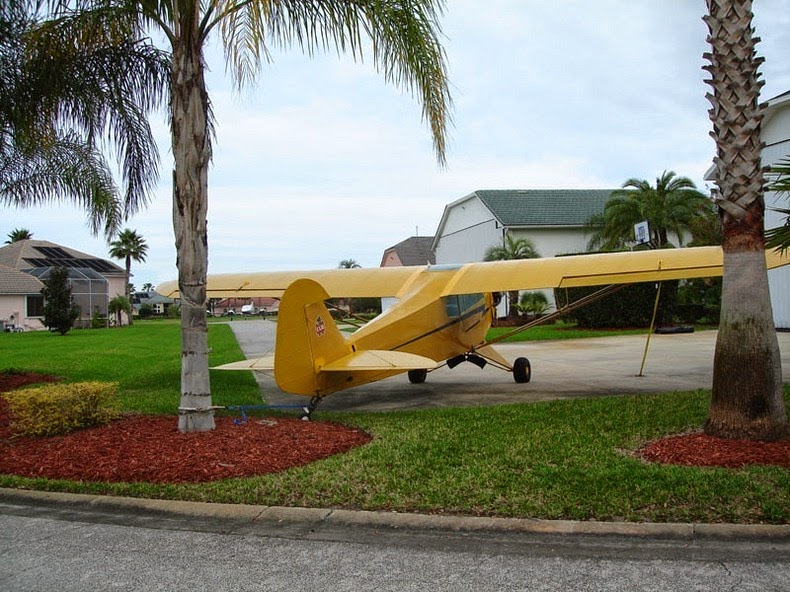
Spruce Creek Fly-In, Florida
TL;DR
Spruce Creek Fly-In properties vary by taxiway position, hangar configuration, aircraft compatibility, and proximity to the community’s aviation activity. A sound purchase starts with the airplane and operating routine, followed by verification of access, hangar dimensions, rules, maintenance obligations, and the property’s residential fit.
Spruce Creek Fly-In is not a subdivision with a runway attached to it.
It is a residential airpark where the runway, taxiway network, and hangar infrastructure organize the community. The houses support that aviation infrastructure as much as the reverse.
That changes how property should be evaluated here.
A conventional Port Orange home search might begin with square footage, lot size, school zone, and curb appeal. At Spruce Creek, the more important question is whether the property actually works for the aircraft and the way its owner intends to use it.
A beautiful house with an undersized or badly configured hangar can still be a weak aviation property. A more modest house with excellent hangar space and clean taxiway access may be far more desirable to the right buyer.
You are evaluating two assets at once: the residence and the aviation infrastructure.
Why Spruce Creek Fly-In Is an Aviation-Property Market, Not Simply a Residential Neighborhood
Spruce Creek Fly-In was built around private aircraft ownership.
That shows up immediately in the layout. Taxiways run behind or beside homes. Hangars are central to a property’s identity. Aircraft movement is part of normal daily circulation.
That has direct real estate consequences.
Governance documents can address aircraft use, hangar construction, airport access, and other issues a standard HOA would never touch. Noise and overflight are expected parts of living in the community.
Property values can also respond to aviation-specific variables such as:
-
hangar dimensions
-
door clearance
-
taxiway frontage
-
maneuvering room
-
runway access
-
aircraft compatibility
Those factors do not map neatly onto comparable sales from a conventional subdivision a few miles away.
Treating a Spruce Creek listing as simply “a Port Orange home with a hangar” misses the point. In many cases, the aviation infrastructure is the defining asset.
Not every owner uses the property with the same intensity. Some homes function primarily as residences with occasional flying. Others are built around frequent aircraft use.
Either way, the aviation side needs to be evaluated deliberately.
How Port Orange and the Daytona Beach Area Relate to the Airpark
Spruce Creek Fly-In sits in Port Orange, Volusia County, within the broader Daytona Beach area.
That location matters because the airpark exists inside one of Florida’s more aviation-oriented regions.
Daytona Beach International Airport is nearby, with towered operations, instrument approaches, commercial traffic, and business aviation. Embry-Riddle Aeronautical University also reinforces the area’s aviation ecosystem.
That surrounding network can mean easier access to:
-
flight training
-
maintenance
-
avionics
-
aviation services
-
fuel
-
regional airports
-
other pilots and aviation businesses
A buyer therefore needs to evaluate the property at several levels.
There is the immediate airpark: hangar, taxiway, runway access.
There is Port Orange itself: services, schools, shopping, healthcare, and everyday livability.
Then there is the larger Daytona Beach and Volusia County aviation environment.
A property can work perfectly inside Spruce Creek while still being more or less convenient depending on its relationship to outside maintenance, fuel, services, and regional airspace.
The Different Kinds of Aviation Property Found in the Community
“Spruce Creek Fly-In property” is not one product.
The community contains several distinct types of aviation real estate:
-
Conventional homes with aviation access. The residence is the primary feature, with aviation access playing a secondary role.
-
Attached-hangar homes. The hangar is integrated directly into the house for convenience and immediate aircraft access.
-
Detached-hangar properties. These often allow larger footprints, more flexible door configurations, and better separation between living and aviation space.
-
Larger aviation estates. Bigger lots, larger hangars, multiple aircraft, workshop areas, or infrastructure built around frequent flying.
-
Pilot-focused second homes. Properties where hangar quality and airport access may matter more than residential square footage.
-
Full-time aviation residences. Primary homes where aircraft ownership is deeply integrated into everyday life.
These categories overlap, but they are useful because they force the buyer to define what they actually need.
Searching only for “Spruce Creek Fly-In homes” is too broad.
A better search begins with the aircraft, the intended use, and the type of hangar setup required.
How Aircraft Type Changes the Real Estate Search
At Spruce Creek, the aircraft should influence the real estate search from the beginning.
A property that works for one aircraft may be unusable for another.
Wingspan and tail height affect door clearance. Turning radius affects maneuverability. Ramp and apron size affect how easily the aircraft can be positioned.
Different aircraft may also create different demands on:
-
taxiway width
-
pavement
-
towing space
-
hangar depth
-
door design
-
workshop area
A hangar designed for a light single may not work for a twin or turboprop.
The opposite can also be true. A buyer with a smaller aircraft may be paying for far more hangar than they need.
Future aircraft plans matter too.
If you expect to move into a larger aircraft later, evaluate the property against that likely future airplane rather than only what you own today.
“Hangar included” is not enough.
Aircraft compatibility needs to be verified against the actual aircraft dimensions and the actual property.
Hangar Dimensions, Doors, Storage, Utilities, and Aircraft Compatibility
The hangar is where a serious aviation-property evaluation begins.
A large building does not automatically mean a usable hangar.
The first numbers to verify are the clear door opening width and height.
Those measurements matter more than the overall building dimensions because the aircraft has to physically pass through the opening. Tracks, framing, hinges, and door mechanisms can reduce usable clearance.
Photos are not reliable for this.
A door that looks generous in listing photos may still be marginal once you compare it to the aircraft’s wingspan or tail height.
Interior layout matters next.
Structural columns, fixed equipment, storage areas, and irregular floor plans can reduce usable space. A nominally large hangar may still be difficult to maneuver inside.
Also inspect:
-
floor condition
-
drainage
-
electrical service
-
lighting
-
ventilation
-
climate control
-
wash-down capability
-
workshop space
-
storage for tools, parts, and tugs
Florida heat and humidity make ventilation and climate control more meaningful than they would be in a dry climate.
Maneuvering room is equally important.
If every departure requires an awkward multi-point tug maneuver, that inconvenience becomes part of daily ownership.
Measure the hangar. Measure the door. Compare both to the specific aircraft.
Taxiway Access, Maneuvering, and Runway Access
Being inside a fly-in community does not automatically mean every property has equally convenient aircraft access.
Direct taxiway frontage is different from shared access.
A property with its own clean connection to the taxiway system may operate very differently from one that depends on a shared lane or tighter maneuvering area.
Look carefully at:
-
pavement width
-
turning radius
-
slope
-
drainage
-
landscaping
-
utility fixtures
-
parked-vehicle conflicts
-
golf-cart and vehicle circulation
A taxi route can be technically passable while still being annoying every time you use it.
The route from hangar to runway matters just as much as the hangar itself.
Buyers should understand the actual path the aircraft will take, any community-specific procedures, and whether the routing works comfortably for the aircraft.
A perfect hangar loses value quickly if the aircraft cannot move cleanly between it and the runway.
HOA/POA Rules, Easements, and Aviation-Specific Due Diligence
A residential airpark adds a layer of due diligence that does not exist in a conventional Florida home purchase.
Start with airport ownership and governance.
You need to understand who owns and maintains the runway and taxiway network, how those costs are funded, and what rights attach to the individual property.
Then review the property’s aviation access.
Taxiway and runway rights may depend on easements, covenants, association documents, or other recorded instruments.
These should be reviewed property by property.
The HOA or POA may also regulate matters such as:
-
hangar construction
-
exterior modifications
-
aircraft use
-
maintenance activity
-
commercial operations
-
fuel storage
-
rentals
-
runway use
Assessment structures also matter.
Airport infrastructure is expensive to maintain. Buyers should understand how runway, taxiway, drainage, lighting, and future capital improvements are funded.
This is an area where legal review is worth taking seriously.
Aviation easements, access rights, and governing documents are part of the core property evaluation, not paperwork to skim immediately before closing.
Florida Weather, Drainage, Corrosion, and Infrastructure
Florida weather directly affects aviation-property ownership.
Heat and humidity influence aircraft interiors, avionics, tools, stored equipment, and the hangar environment itself.
Heavy rain makes drainage especially important.
Poor grading around a hangar or taxi path can lead to:
-
standing water
-
pavement deterioration
-
moisture intrusion
-
corrosion exposure
-
maintenance problems
Roof condition and the building envelope deserve close inspection as well.
Storm and hurricane exposure also raise questions that are more important for aviation property than for an ordinary house.
Ask about:
-
hangar structural condition
-
hangar door wind resistance
-
backup power
-
drainage
-
aircraft evacuation planning
-
storm preparation procedures
Insurance should also be addressed early.
Property insurance and aircraft insurance are separate issues, but both can be influenced by Florida storm exposure and the specifics of the property.
Do not assume costs or coverage based on what another owner pays.
Verify directly with the relevant insurer.
Why Aviation Real Estate Requires Specialized Property Evaluation
A Spruce Creek property has to work as both a home and aviation infrastructure.
Those two evaluations do not always point in the same direction.
A renovated house can still have a marginal hangar.
A modest house can have exceptional aviation functionality.
Landscaping that looks good from the street can interfere with aircraft movement from the taxiway side.
A larger house can come with worse hangar space.
A less dramatic property can offer better runway access.
That is why conventional residential metrics are not enough here.
A strong aviation property works for both the household and the aircraft.
The hangar, taxi route, governing documents, access rights, and aircraft fit deserve the same scrutiny as the roof, HVAC, kitchen, and foundation.
Finding the Right Aviation Property Specialist
Spruce Creek Fly-In is specialized enough that general residential experience does not automatically translate.
An agent working this market should understand how to evaluate more than the house.
That includes:
-
residential airparks
-
hangar dimensions
-
hangar-door clearance
-
aircraft compatibility
-
taxiway access
-
runway access
-
aviation easements
-
airport governance
-
property-specific operating constraints
If you are considering a purchase here, the goal is not merely to find someone who sells homes in Port Orange.
It is to work with someone who understands aviation property.
We do not operate as the listing brokerage for these properties, and we do not claim private access to every listing or every local agent.
What we can do is help connect serious buyers with a specialist whose experience matches the aircraft, intended use, and type of property being considered.
Related aviation and specialty-property guides
Talk through the assignment
Find an agent who understands this kind of property.
Tell Dalton the location, your intended use, and the details that cannot be compromised. He will help connect you with a knowledgeable aviation real estate professional whose experience fits the property.
Describe what you need